Home Honey Typeface Evaluation
In the landscape of digital and print design, selecting a typeface requires more than aesthetic preference; it demands an understanding of how letterforms influence user perception and brand identity. Home Honey is a display typeface that has gained attention for its distinct character. It is defined by its playful, handcrafted warmth, utilizing chunky, rounded letterforms to create an immediate sense of approachability. This article provides an objective evaluation of Home Honey, analyzing its structural characteristics, ideal applications, and potential limitations to assist designers in making informed decisions.
Understanding the Design Characteristics
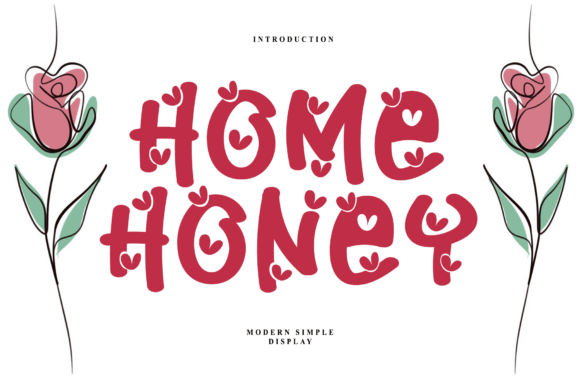
Home Honey is not a standard geometric sans-serif or a traditional serif font. Instead, it belongs to the category of whimsical display fonts designed to evoke emotion through form. The primary visual hook of this typeface is its use of heart-shaped counters—the enclosed spaces within letters like 'a', 'e', and 'o'. These subtle details transform standard typography into a narrative element, suggesting themes of love, care, and domestic comfort.
The strokes in Home Honey are notably thick and soft. Unlike sharp, angular fonts that convey modernity or efficiency, the rounded edges of Home Honey soften the visual impact of text. This "chunky" quality ensures high legibility at larger sizes, which is typical for display fonts used in headlines and logos. However, the heavy weight of the characters means they occupy significant visual space, requiring careful consideration of layout density.
Ideal Applications and Use Cases
Evaluating where Home Honey fits best involves looking at industries and contexts where emotional connection is paramount. The font's inherent warmth makes it a strong candidate for specific sectors:
- Home Decor and Boutique Branding: For businesses selling handmade goods, candles, or cozy home items, Home Honey aligns well with the "hygge" aesthetic. It reinforces a message of comfort and personal touch without needing additional graphic elements.
- Children's Apparel and Products: The playful nature of the letterforms suits brands targeting young audiences. The rounded shapes are visually safe and inviting, which can be crucial for packaging that needs to appeal to both children and parents.
- Festive and Seasonal Greetings: Because of the heart motifs and sweet appearance, this typeface is highly effective for holiday cards, wedding invitations, and Valentine's Day promotions where the subject matter is romantic or celebratory.
- Sweet Product Packaging: Brands dealing in honey, pastries, or confectionery often seek typography that mimics the texture of their products. The soft, viscous feel of the font strokes complements the sensory experience of eating sweet treats.
Benefits of Using Home Honey
The primary advantage of Home Honey lies in its ability to establish tone instantly. In a crowded market where minimalist and corporate styles dominate, a font with such a distinct personality can help a brand stand out. It reduces the need for extensive graphic decoration because the typography itself carries the decorative weight.
Furthermore, the font creates a sense of intimacy. When a customer sees a logo or headline in Home Honey, the psychological response is often one of trust and familiarity. This can lower barriers to entry for new customers who might otherwise find a brand too formal or distant. For personalized gifts and custom merchandise, the font adds a layer of craftsmanship that feels human-made rather than algorithmically generated.
Potential Limitations and Tradeoffs
While Home Honey excels in specific niches, it is not a universal solution. Designers must weigh several tradeoffs before committing to it for a project.
Legibility at Small Sizes: Due to its thick strokes and complex internal shapes (the hearts), Home Honey may lose clarity when scaled down for body text or small labels. It is strictly a display typeface and should not be used for paragraphs of copy.
Brand Longevity: Fonts with strong thematic associations can date quickly or become difficult to evolve. A brand using Home Honey today as a "cozy boutique" might find it difficult to pivot to a more serious, professional image later without rebranding entirely. The font locks the brand into a specific emotional lane.
Overuse Risks: Because the font is so expressive, there is a risk of it appearing cutesy or childish if applied to inappropriate contexts. Using it for financial services, legal documents, or technology products would likely create a dissonance between the message and the medium, undermining credibility.
Decision-Making Framework
To determine if Home Honey aligns with your goals, consider the following factors regarding your target audience and brand objectives.
If your goal is to communicate approachability, Home Honey is a strong fit. It signals that the business values relationships over efficiency. However, if your brand strategy relies on conveying precision, speed, or authority, you should look elsewhere. Alternatives such as clean sans-serifs or elegant serifs might better serve those needs.
Consider the medium of distribution. On high-resolution screens and printed materials, Home Honey performs well. However, in environments with strict accessibility guidelines or low-contrast displays, the complexity of the letterforms might pose challenges for users with visual impairments. Always test the font against background colors to ensure sufficient contrast.
When evaluating alternatives, ask yourself what specific emotion you want to trigger. If you need warmth but want a more neutral option, consider a rounded sans-serif without the heart counters. If you require a handcrafted look but need better legibility for long-form text, a script font paired with a simple sans-serif might be a more balanced combination.
Conclusion
Home Honey is a specialized tool in the designer's arsenal. It offers a unique blend of playfulness and comfort that is difficult to replicate with generic typefaces. Its strength lies in its ability to turn words into feelings, making it an excellent choice for brands in the lifestyle, food, and gift sectors.
However, its specificity means it is not suitable for every project. Success with this font depends on matching its personality to the right context. By carefully considering the tradeoffs between visual charm and functional clarity, designers can leverage Home Honey to create memorable and cohesive brand identities that truly feel like home.